Performance of Vintage Resin in Jewelry Casting

رزین وینتیج

Table of contents

1. Properties and Performance of Vintage Resin in Jewelry Casting

Shrinkage of Vintage Resin in 3D Printing: Importance and Measurement
Shrinkage refers to the reduction in model dimensions after 3D printing. The degree of shrinkage depends on factors such as the chemical composition of the casting resin, the curing intensity and duration, and the post-processing steps.
In a conducted test, the shrinkage of a solitaire ring printed with Vintage resin at room temperature was measured at 0.5 size over 60 minutes. This measurement was taken using a ring mandrel, where each size equals an internal diameter of 13.2 mm (0.52 inches).

2. Vintage Resin Casting Performance: Ash Content and Reaction with Investment Plaster

In the process of gold and jewelry casting, two major factors influence the performance of photopolymer resins:

  • The percentage of ash remaining after the resin burns

  • The resin’s reaction with investment plaster

Resins that leave excessive ash during the casting cycle cause surface defects on the final piece. For this reason, selecting a resin with low ash residue is a key quality factor.
Vintage resin leaves only 3% ash by weight after combustion, making it an ideal choice for precise and flawless casting results.

3. Surface Quality of Models Printed with Vintage Resin

Surface quality in 3D printing is affected by factors such as the type of resin, the accuracy and resolution of the 3D printer, the model’s placement on the build plate, and the number and type of supports used.
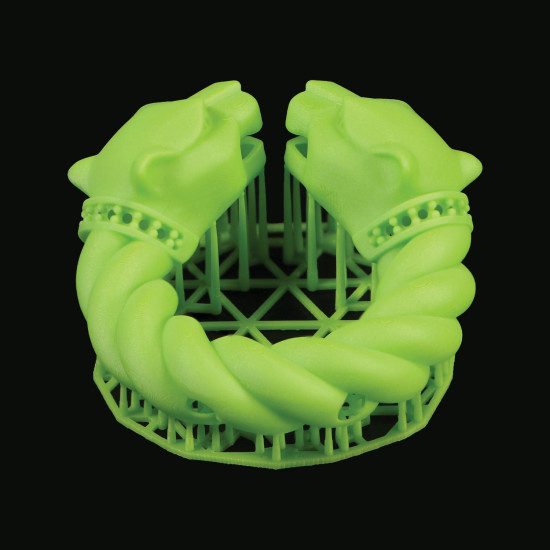
Models printed with Vintage resin achieve a surface quality rating of 9.5 out of 10, ensuring exceptional smoothness and clarity for fine jewelry details.

4. Flexibility of Vintage Resin and Its Impact on Stone Setting in Jewelry

Flexibility in 3D printing materials is crucial, especially for stone setting in fine jewelry. The stone must fit perfectly into its seat or prongs, and the prongs must securely grip the stone. To achieve this, the resin should be flexible enough to return to its original shape after pressure or impact.

For resins suitable for stone setting, the maximum tensile stress should not exceed 3 N/mm² and elongation should be under 50%.
For Vintage resin, these values are 1.61 N/mm² and 11.85%, making it a precise and reliable choice for delicate jewelry work.

5. Conclusion

  • With its high surface quality, controlled shrinkage, low ash residue, and ideal flexibility, Vintage resin is one of the best options for jewelry casting and producing intricate models with a 3D printer. While the price of a 3D printer and consumable materials may be an important factor for some, choosing the right resin—such as Vintage resin—can significantly enhance both the quality and efficiency of production.
Why is Vintage Resin the Best Choice for Jewelry Casting?

To this day, traditional gold casting still dominates the market due to its long history and established infrastructure. However, 3D printing is growing at a rate four times faster and is rapidly overtaking in adoption. The final choice depends on your brand’s strategy, budget, and design goals. Still, ignoring the rise of 3D printing technology is equal to falling behind the competition within the next five years.

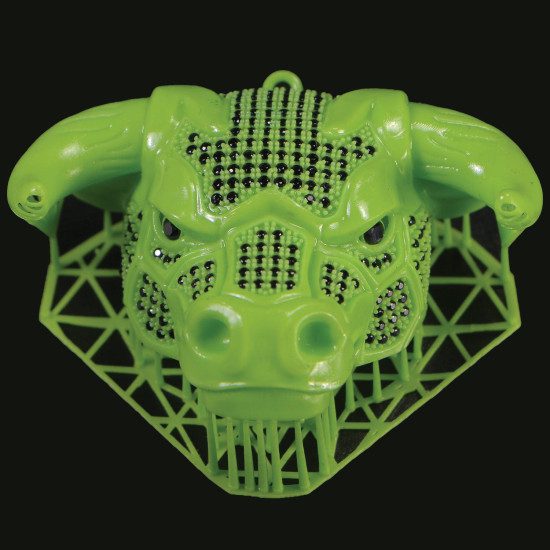
A few examples of vintage resin printed models

Categories
Gold casting quality with PowerResins
Dark resin
Gold casting quality with PowerResins
Opaque resin
Gold casting quality with PowerResins
Wax resin
Gold casting quality with PowerResins
Vintage resin